



Subscribe
Take a Step Towards Climate Justice in Seattle.

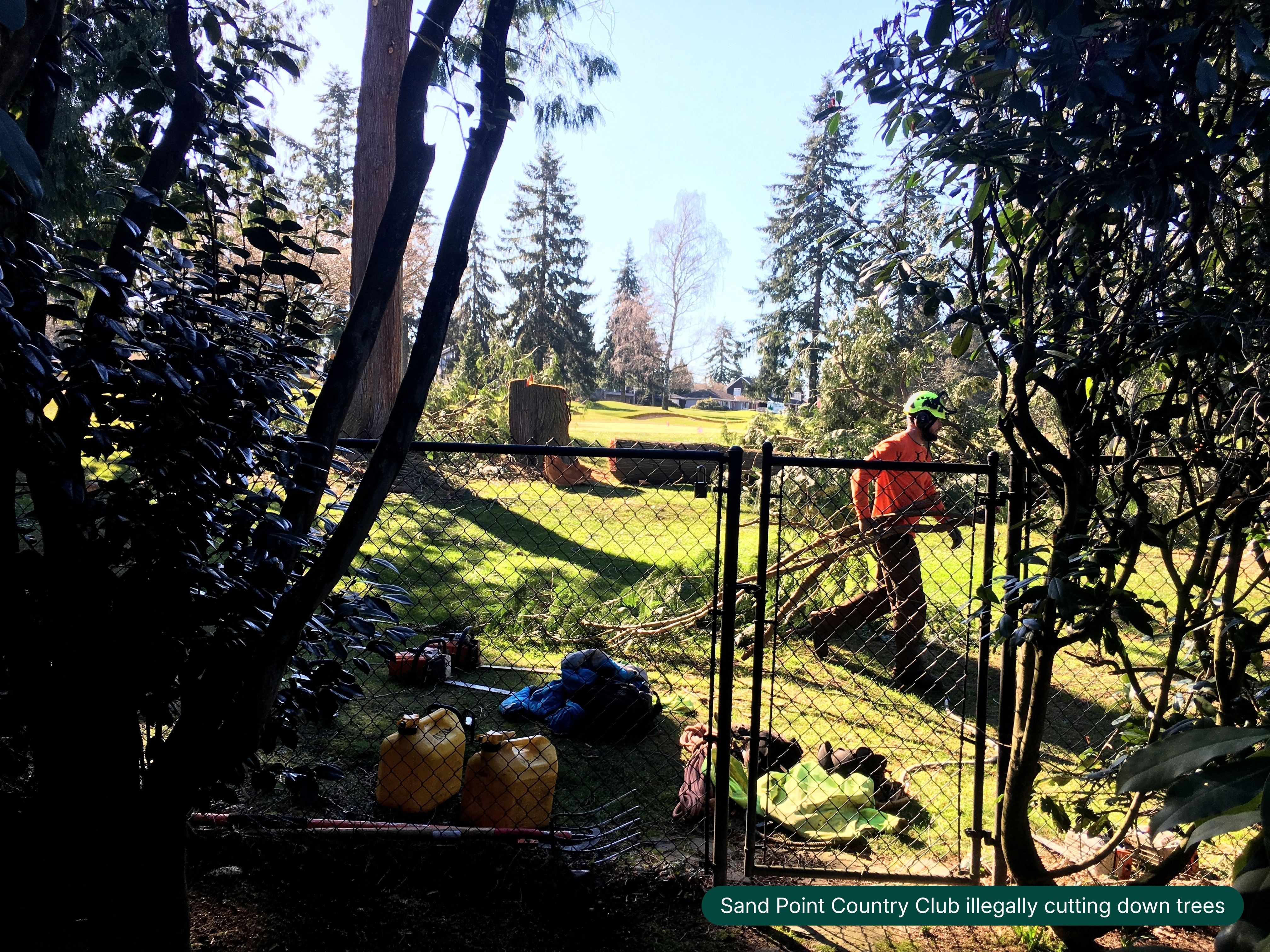
Tree Action Seattle and Thornton Creek Alliance recently released a report showing illegal tree removals and damage to Environmentally Critical Areas in Sand Point Country Club.
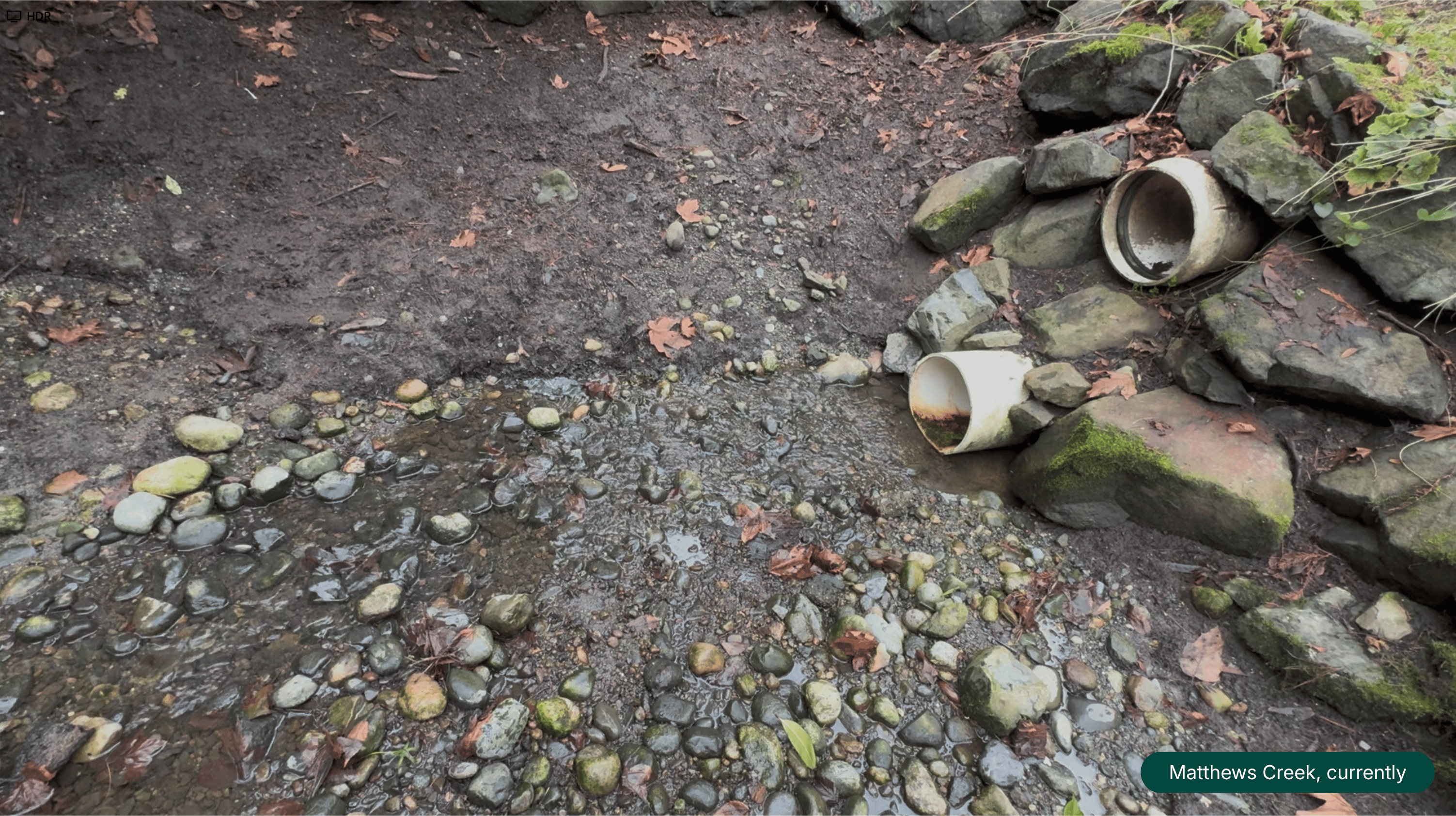
As mitigation, we are calling for a feasibility study and planning process to daylight the culverted sections of Matthews Creek and restore a native habitat buffer along the stream.
Restoration must match the scale of the damage that has been done. Planting small saplings and paying fines is inadequate.
Matthews Creek is located in the ravine in the NW portion of the golf course. On maps it is considered part of a system which flows into Thornton Creek near the Matthews Beach Park outfall. The creek is daylit in the ravine, but the rest of it is buried in a plastic pipe. This pipe runs beneath hundreds of feet of lawn and is joined with stormwater drainage pipes from golf course residences.
The Thornton Creek system was once a highly productive salmon stream where indigenous people built at least one longhouse, fishing weirs, and gathered cranberries in the bogs. We understand that this tributary will not support salmon again, but it can and should support habitat for a wide variety of species that require a diversity of trees, understory, and a healthy stream.
Unlike many urban stream restoration projects that require relocating roads, utilities, or buildings, this culvert runs beneath maintained turf. Restoring this reach would involve removing lawn and re-establishing a natural stream corridor — far simpler than many stream restoration projects undertaken elsewhere in Seattle.
Thornton Creek has become so polluted that it was withdrawn from the Salmon in the Schools program. Juvenile coho salmon released by students returned as adults only for many of the adults to die before spawning after encountering toxic urban creek water at the mouth. (Today, coho are again being released, but only because they have positive effects on the overall ecosystem. Documented pre-spawn mortality rates have not improved.)
Restoring buried tributaries and rebuilding forested buffers is one of the most effective ways cities can begin mitigating climate change and creating more habitat for birds, especially those using the Pacific Flyway.
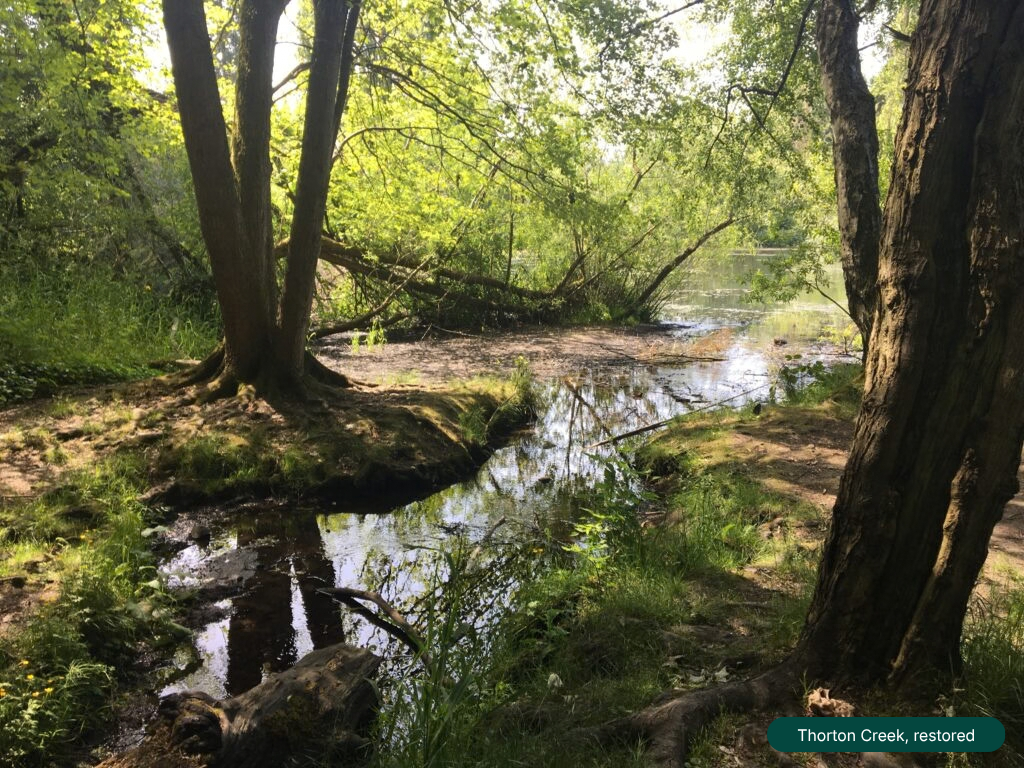
Daylighting buried streams is already a central strategy in the restoration of Thornton Creek. Over the past two decades, projects throughout the watershed have removed or replaced culverts, rebuilt natural stream channels, and created buffer zones to improve habitat and water quality.
Many of these projects were far more complex than what would be required here. Some required the City to purchase homes and properties to create space for flow control and restoration. Others involved reconstructing roads and utilities.
Despite those challenges, the City pursued those projects because restoring natural stream systems is essential to recovering urban stream habitat.
Compared with those projects, restoring Matthews Creek would be unusually straightforward.
Healthy riparian forests are one of the most important natural defenses against water pollution, erosion, and flooding. Trees shade streams and keep water temperatures cool. Their roots stabilize stream banks. Their leaves and woody debris support aquatic food webs, as do the insects and other invertebrates that fall from them into streams. The downed wood provides instream cover and helps diversify channel morphology. Most importantly, forested buffers help filter polluted runoff before it reaches the stream.
Removing large numbers of mature trees from a riparian corridor undermines these protections and weakens the creek’s ability to recover from urban pollution, which in turn harms wildlife and fish.
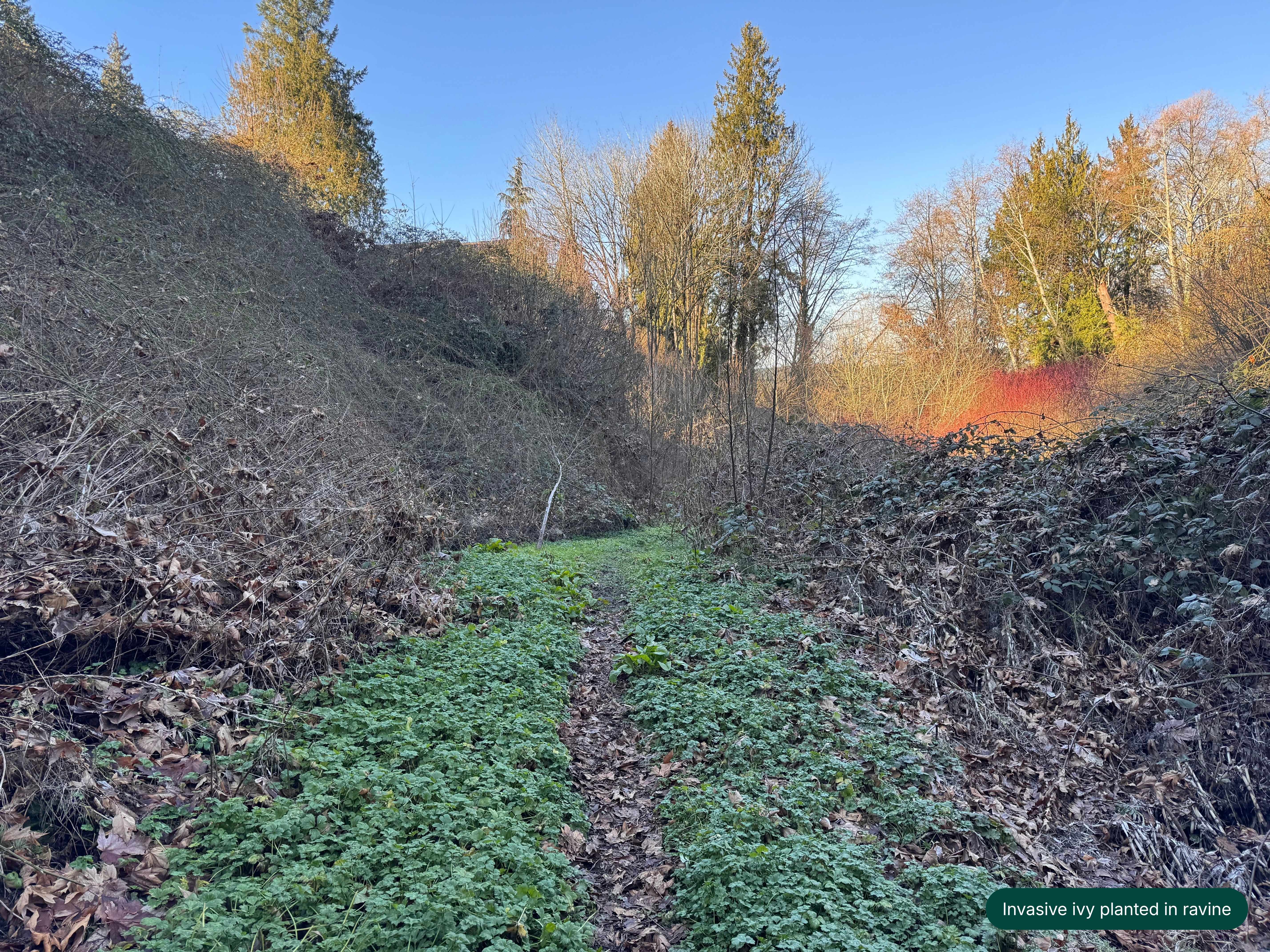
Planting or leaving invasive plants discourages native wildlife and encourages rats.
If Thornton Creek is ever to become a healthy habitat again, it cannot remain buried in culverts, deprived of its buffer zones, and stripped of the forests that protect it from polluted runoff — including fertilizers, herbicides, and pesticides commonly applied to intensively managed landscapes such as golf courses.
Mitigation in the form of planting small saplings does not match the scale of the environmental harm which has been done. The benefits that mature trees provide, as listed above, would take decades to reestablish after simply planting saplings. Instead, restoring Matthews Creek and re-establishing a native forest buffer would be a meaningful step toward repairing the damage and rebuilding the ecological health of the Thornton Creek watershed. It would also advance the City’s stated goals for urban forest protection and climate resilience.
Creek photo: Thorton Creek (restored). White pipe: buried Matthews Creek, a tributary of Thorton Creek.


.png)